What we want to understand
Magnetic resonance imaging helps reveal structural changes in the nervous system. Body fluid biomarkers can offer complementary information about the biological processes and cell types involved in injury.
Our work focuses on finding promising signals, refining sensitive ways to measure them, and testing what those measurements mean biologically.
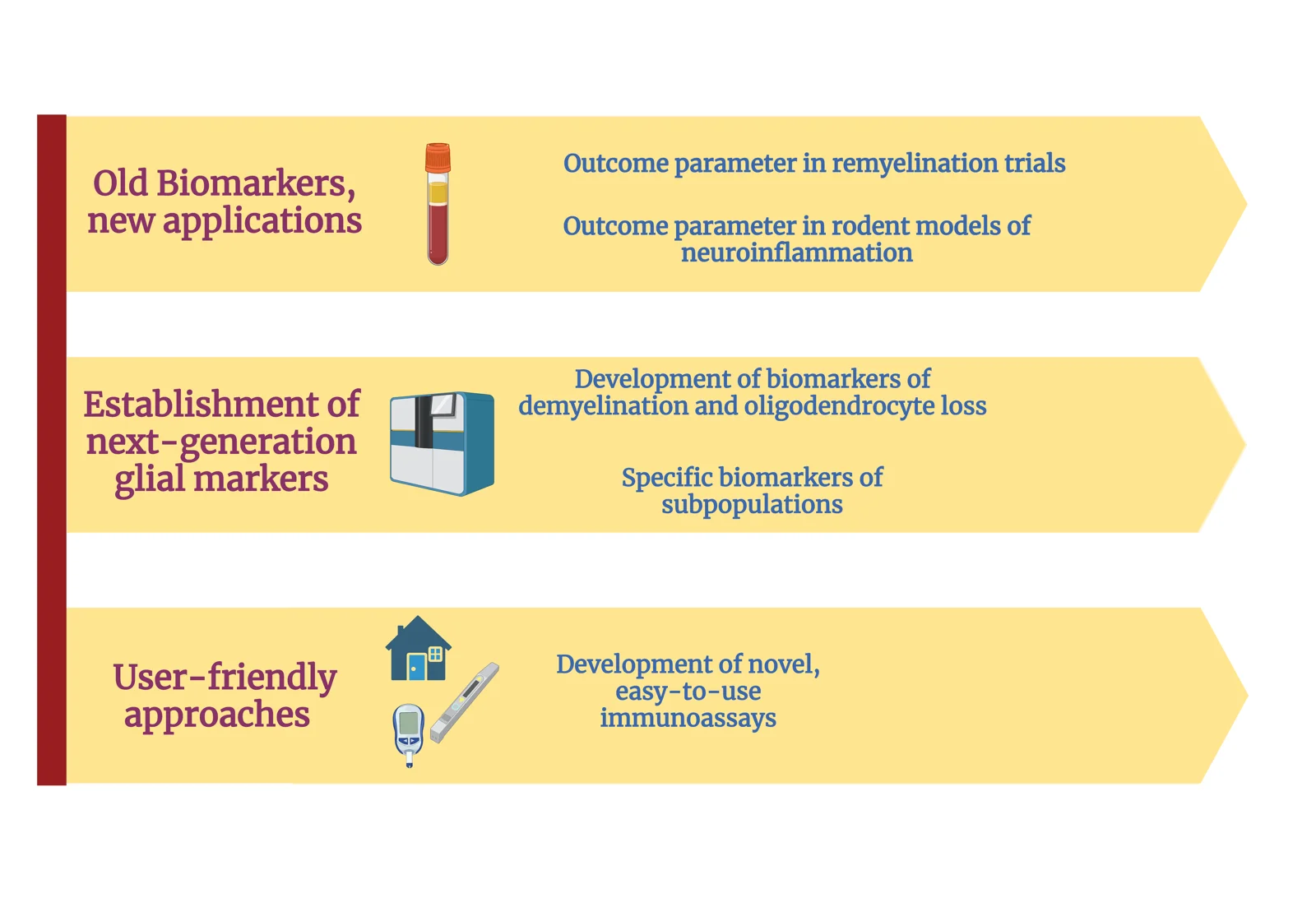
Three connected research priorities
- Identify candidate signals
Study proteins and peptides that may reflect nervous system injury and the processes contributing to disability.
- Develop sensitive measurements
Refine assays that quantify small amounts of proteins in plasma, serum, and cerebrospinal fluid.
- Validate the biology
Investigate where these signals originate, how they enter body fluids, and how they relate to disease processes.
Why biological validation matters
A measurable change is most useful when researchers understand what it represents. Connecting a biomarker to its biological source can help distinguish processes that overlap in multiple sclerosis, including inflammation, myelin damage, and neurodegeneration.
Astrocytes and disease progression
Astrocytes support the function of the central nervous system. The lab’s existing research material describes investigating astrocyte-related proteins to understand their relationship to neurological injury and disease progression. Research measurements require validation before clinical use.