University of California San FranciscoNeuroimmunology & Glial Biology

Myelin repair

Investigating the biology of remyelination.

Myelin insulates nerve fibers. Our research examines how its repair can be measured and how potential reparative approaches can be evaluated.

From a biological idea to a measurable question

In multiple sclerosis, injury to myelin and nerve cells can affect neurological function. The Green Lab studies biological markers of repair and progression to support the development and evaluation of potential reparative therapies.

Connecting laboratory and clinical research

The lab’s work spans biological validation and clinical trials. ReCOVER examines clemastine in acute optic neuritis; ReVIVE uses MRI measurements in people with multiple sclerosis.

These are research studies of an investigational use. Their inclusion here does not establish clemastine as an approved treatment for myelin repair.
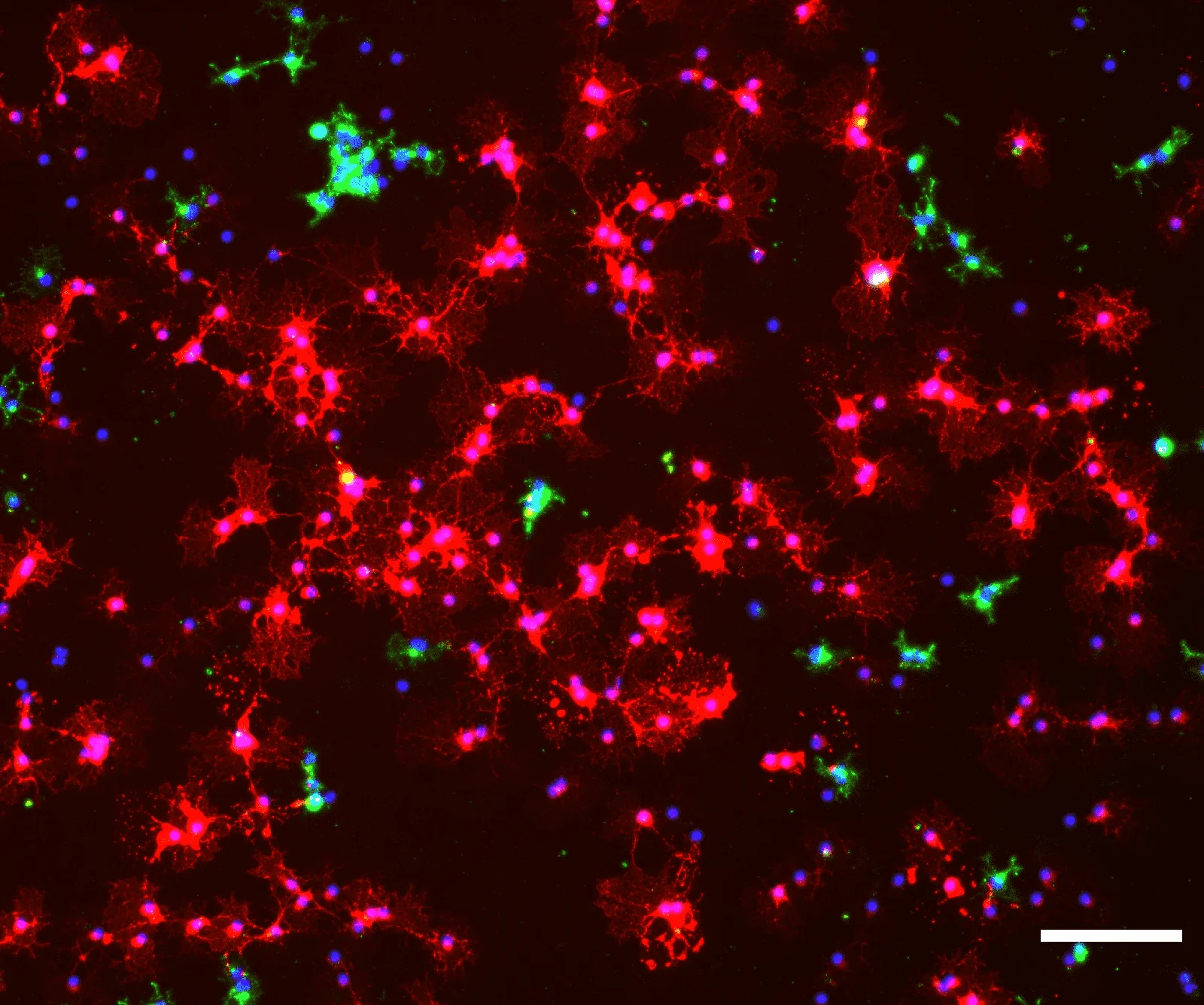
Original fluorescence microscopy image showing red and green structures and blue fluorescent points, with a scale bar at lower right
Microscopy image reused from the original ReCOVER page. Scientific marker labels and scale value need confirmation before production publication.

Selected evidence

2026

Myelin repair

Clemastine fumarate promotes myelin repair in a nonhuman primate model of demyelination characterized by absent spontaneous remyelination.

Sarrazin N, et al.
PNAS · 123(8):e2520161123

Read publication on PubMed
2017

Clinical trials

Clemastine fumarate as a remyelinating therapy for multiple sclerosis (ReBUILD): a randomised, controlled, double-blind, crossover trial.

Green AJ, et al.
The Lancet · 390(10111):2481–2489

Read publication on PubMed

Adapted from the source research information.

Connect with us

Better questions. Shared discovery.

Contact the lab